An introduction to the community of Anstruther Boat Museum developed by St. Andrews University, has global significance, greatly lauded in U.S. wooden yachting circles, features Tom Cunliffe et al.
<<The later Smith & Rodger logo has the color crimson of the raw lac resin exported from India (represented in the featured keplermission video avatar), yellow symbolic of the finished shellac product, in an ellipse signifying the planning of Washington's 'White Lot' in the United States, that from the year 1877 when Smith & Rodger was begun, sported a whitewashed boundary fence, whitewash a product that uses shellac. The S & R company recently decided to change the relief color back to the original white (on blue as the Scottish Fisheries Museum management shirts) in respect of the whitewash shellac product, a stage further than shellac flakes, and to more closely resemble the white in the U.S. Zinsser logo. The city of Glasgow had long looked towards the United States Of America that in Victorian times it had enjoyed a lucrative exporting relationship with via the ports and harbors of the locality. The shadow relief of the original logo has also been carried onto the new one.
>>Dr. Robert Prescott's London shuttle bus, a silver Volvo 850 below in a location very similar to his Medway office, a 1994 year silver Suzuki Vitara for shorter trips and a great ornithologist, wearing all the kit, he'd appeared at R.S.P.B. visitor centers talking loudly to his company about exotic sightings, perhaps contrived beforehand but did sing Sea Shanties he'd had on numerous cassette tapes, astounding albeit lacking instrumental support, they'd been an academic exercise of some use.
>>The commercial van Freelander 1 Photo carwow has steel wheel hub covers based on the 1994 year Suzuki Vitara, this is a 2002 year model, the first appearing in 1997 were mechanically awful until sorted under the German B.M.W. acquisition but when the interior redesign had suffered aesthetically. That Prescott laid hold of a 1994 Vitara was quite a feat, they'd been rust buckets and were then exceptionally few and far between.
<<Hew Lorimer had passed the Anstruther Museum buildings down to a couple of founder members each a proven local hoarder of maritime artifacts, Prescott was one, his acquisition of a 1994 Vitara, a measure of the man, or in Prescott's case, of the gentleman. He'd have searched high and low for the vehicle all the time in mind of Wordsworth's poem, 'The Solitary Reaper', that he'd liked even although the Museum's boat was first named as such in the year 1902.
>>David Tod was the other founder member collared by Hew Lorimer seated above. Tod, a fishing industry skipper and mechanical engineer from a family of Bakers drove a purple FIAT X1/9 he'd really enjoyed although rare as hen's teeth on the internet today, only one picture in purple the other a modified FAZA Bertone, Toddy's not with such wide wheels out of proportion to the body, everything to look neat and here holding a quake, for whisky. Below, Toddy is seen with the wife of Ming Campbell holding a quake out to the White Wing yacht. The Campbells Are Coming is a tune often played by the pipes and drums of The Argyll & Sutherland Highlanders to which the 2nd Yacht's Officer, A.D. Rodger McAslan had been attached as a Major, (responsible for 150-200 personnel) their H.Q. lay just across the street from Smith & Rodger, and at the end of a formal dinner the quake is offered to the Pipe Major as a Thank You gesture serving as a reminder of the shared experience and bonds formed during military service, here Tod was saying goodbye forever and died soon afterwards as had Lady Campbell.
>>Real elite EMI loudspeakers, presumably of the aristocracy are thickly French Polished, but remain totally excluded from the general public, they're still able to be repaired in a Belgian business but with a barrier hard to define, a social class glass ceiling. Most sought after model is the EMI Broadcast 45 in French Polished Burr Walnut, the awesome French Polished Model 69 isn't found in auctions but a plain version is. Most EMI speakers on the internet today are from mass market sources, Scope 'Dangerous Loudspeakers', and ' the Abbey Road Studio Monitor' were the first.
<<A Wharfedale lightly French Polished corner cabinet from the 1950s Gilbert Briggs era, note the symmetry in veneers. The semi-autonomous peasant owner is best represented by Rodger McAslan, David Corner below, or Robert Prescott weren't Merchants, they could be rude and obnoxious in demeanor at times, may even have been Yeomanry, but had been customers of wood treatments used in a boat museum, and weren't Hi-Fi Audio system devotees.
>>David Corner originally from Birmingham, England, was at Oxford and became an official at St. Andrews University, but there is no sign of him having a degree, as President of the Anstruther boat museum he was silent and haughty, couldn't drive a car despite years of instruction and used a bus. Obsessed with medieval churches he'd sought to visit and reported as having a good sense of humor, he had in fact shocking anger issues as a tour guide of 1st year students at St. Andrews Abbey, very formidable back in the days when he'd had black curly hair, he was a Roman Catholic and Hew Lorimer a convert to that faith, both lived in austerity, Corner's house not Yeomanry was in the suburbs of St. Andrews and hardly middle class, the struggles of fisherfolk likely appealed to their outlook.
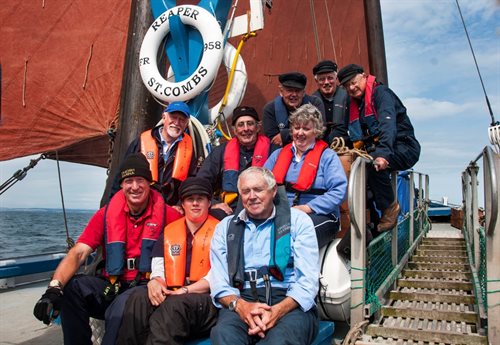
<<A.D. Rodger McAslan far right, front row with David Corner and founder member Robert Prescott suffering from peritoneal cancer. Chief Skiρper Tony Davisback row between Prescott and Corner, with Ian Murray hidden. The others are a fishing industry skipper far left and a Skiρper far right, not Tom Gardener but capable of bringing a boat back in one piece.
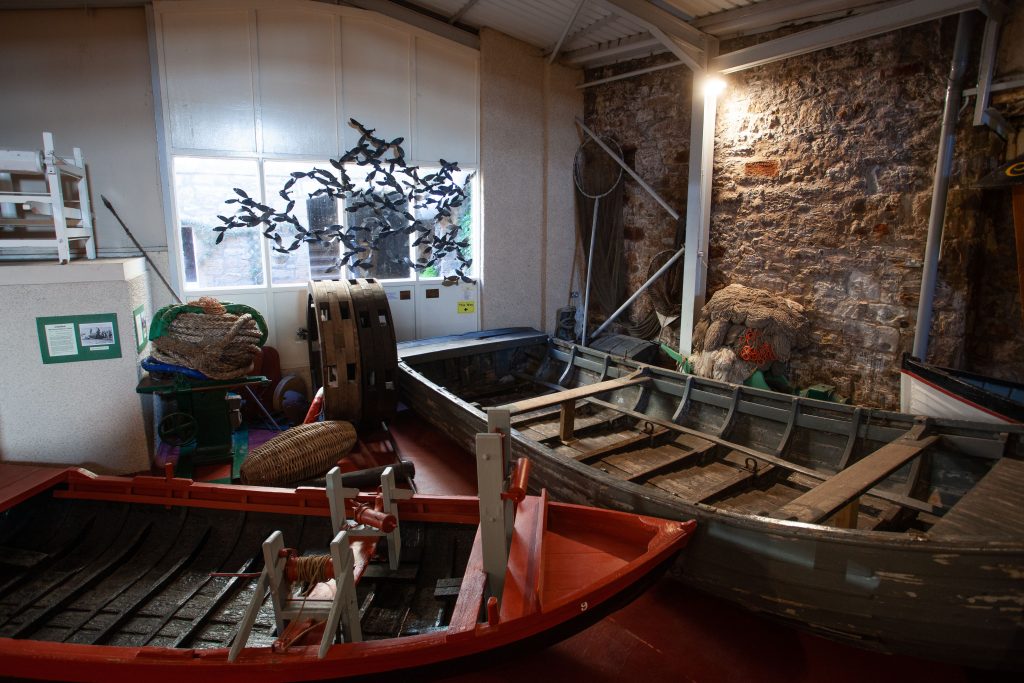
>>The Anstruther area does have that boat museum and this wooden pipe for smoking also used shellac but this photo is of a lower aristocrat, an echelon known as gentry and these are the early vintage Audio, High-Fidelity, users initially of gramophone records also made from shellac. People in the above boat museum weren't Audio people and they were quite happy to work on a member's wooden yacht free of charge but wouldn't assist at all in vintage loudspeaker construction, despite being fully equipped. Vintage yacht clubs obviously did build speaker cabinets that were French Polished but not the one above, and there is no French Polishing technique on display there either.
<<A Baker's Selhurst 12 inch full range loudspeaker in a shellac finished cabinet. The lower port appears to be a 'T-slot', a sloping panel leads a column of air up to the top and gives a better low frequency sound but in the 1950s, low frequency was never great, and they were very hard working times for the majority of the population. A germanium transistor cost the equivalent of a few weeks' wages, and it had gold-plated details. These germanium transistors were the first stage of progress from tubes and not only prohibitively pricey but everybody obviously wanted the sound they'd made compared to tubes that you could get for a fraction of the price. Later when silicon transistors appeared they were more reliable but didn't sound as awesome, the germanium sets were very unreliable and you just had to look at them in the wrong way and they broke, they were treated in a reverential way, owners would tip-toe around germanium transistor equipment and it was a marked behavior in the older generations then.
...
>>A fishing industry skipper touches his forelock to the upper management who were lower middle class, or semi-autonomous peasants, a British tradition lost after W.W.2 from Nazi Germany's raised arm. The social class being honored is an employer lauded due to educational background. David Corner had been at Oxford but hadn't any distinguishing letters so St. Andrews University made him an honorary Doctor of Letters, and whilst Matthew Tanner says of Martyn Heighton 02.Feb.2017 that he 'was always inclusive, and always embracing - welcoming people in and encouraging them to find their own place in the national heritage', this wasn't so with David Corner.
<<John Noble was a Scottish Fisherman that hadn't followed Martyn Heighton's supposed lead but rather his own, or that of the president who'd himself been given an honorary 'Doctor of Letters' to keep him on board so that he hadn't needed to walk the plank! In any case Matthew Tanner's claim about Martyn Heighton wasn't true, he was elitist and exclusive as were Prescott, Corner and all the rest of them Brits ... you too! The whole East Neuk and other British establishment area code applied, snobbery, and from the lowest of the low to the highest of the high, touching the forelock and sycophantic expression were the order of the day. These were the forces at work in forging the Anstruther Boat museum, but Tom Cunliffe in his video on the museum's yacht, bucks that trend and we can see Prescott who'd belonged to the School of Biology at St. Andrews University, adopt a displacement reaction, his anger later redirected at a less formidable target, 'the night of the long knives' at Anstruther Boat museum.
>>Anthony Chenevix Trench put forward that: 'the greater your power and privilege in life the greater your obligations and the less your freedoms. Many people with power and privilege haven't recomembered this, we can all think of some' but his idea that this was instilled in pupils of the school where he was headmaster is really little better than Matthew Tanner's glowing appraisal of Martyn Heighton. Dr. Prescott belonged to the school of Biology at St. Andrews, he was versed in psychology, he knew what displacement reactions are, and yet he still went in for purges. Then we see his expression when suffering with a terminal illness that means he himself won't be able to return, and Chenevix-Trench of course banished to Fettes College in Scotland, had died relatively young, he was sixty but active some six years after A.D. Rodger McAslan had left his school that was also in the bad books from 1950s experiences.
>>Mrs. Lise Hudson is headmaster of the independent and co-educational High School of Dundee who views Vistage as a lifeline. Her school featured in an online evaluation of teachers, and you know she was reckoned cast as a favorite but to have feet of clay meaning: 'someone who seems to be a paragon of virtue or is exceptionally prominent or well thought of in the community however has a disappointing behavioral feature not well known to society.' Even so her students came across as full of beans, meaning lively and in high spirits, and of course that is crucial to good learning, an environment free of bullying of one sort or another, the previousheadmaster at her school you know ... 'a fish rots from the head down'.
<<Peter G. Rant was a Scottish Nationalist M.P. elected like others of his fold to give the region a particularly nice look, a glossy shellac-like finish typical of a shop selling, tartan and leather goods. But the S.N.P. hadn't placed any conditions on their funding of the Anstruther Boat museum, they posed in photos but did nothing to improve the order, and St. Andrews University had put a stop to their internal bullying culture entirely through their own efforts and know-how, not S.N.P. led.
>>Dr. Matthew Tanner's glowing appraisal of Martyn Heighton is interesting in the views it raises, not that Martyn you know had deserved such praise, he was a real elitist with Robert Prescott, and the people who'd forged the world famous Anstruther boat museum, largely connected with Fife County's Council owned St. Andrews University, the first established in Scotland in 1413. Prescott was well-liked among locals from the 1970s, but had like David Corner a disloyal savagery that perhaps Matthew Tanner's appraisal of Martyn Heighton at least brings to mind. 'Never afraid to be critical and express his professional views based on ... he gave his advice without fear or favor ... and was much respected for that', but where lesser beings would have been banished as outspoken for anything similar. The bad side of these people can be traced to unhappiness and displacement reactions, the good side not enough to compensate but their museum is now lacking their drive, enthusiasm and vested interests.
...
<<Richard Wemyss had been a Curator of the Anstruther boat museum and had worked on a figurehead that he'd famously claimed 'had been lying in a garden for years', painted white sitting on concrete beside an alleyway in front of a house in Upper Largo, it had been acquired by Robert Prescott and greatly missed by drivers on the main through road there. Prescott was known as a very active 1970s collector of shipping souvenirs and cultivated an air of self importance and grandiosity as his boat museum grew in size and fame. Rodger McAslan was an early antique dealer in Glasgow and hit it off with Prescott as a collector of history.
>>Rodger McAslan appeared in St. Andrews during the mid-1990s driving a navy blue B.M.W. E31, the first of that now forgotten wedge type grand tourer, and unlike Prescott you know, had used cars as a prestige statement. Meanwhile David Corner would sit in the middle of a bus, all the time eager to master driving but with no success. The E31 was a rare sight on local roads and top of the range.
<<Prescott's rare Suzuki Vitara jeep was silver instead of the red seen here, the silver color of cars belonging the Fifie class yacht REAPER had denoted the local community of Silver Dyke, even although Prescott lived in Anstruther with his few paying guests connected with St. Andrews University, it was a tiny terraced house resembling the accommodations on a commercial ship, his Vitara car had to be parked in a space at the rear of that, and still be able to perform feathered bird watching trips off road.
>>Some of the best photographs taken at the local Boat museum were by the environmentalist Simon Hayhow. The purple weeding bucket above was kept in a special location and this person also did planters and hanging baskets. Some daffodils seen suggest the time of year as Lent, beginning on Ash Wednesday ending Holy Saturday, potted flowering plants used by locals to brighten up paved areas.
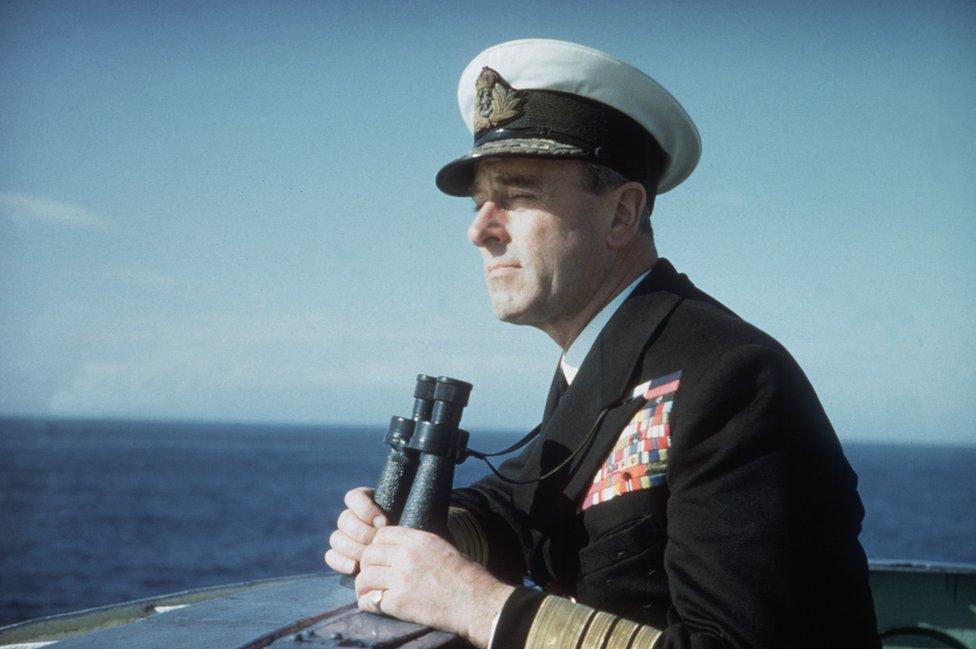
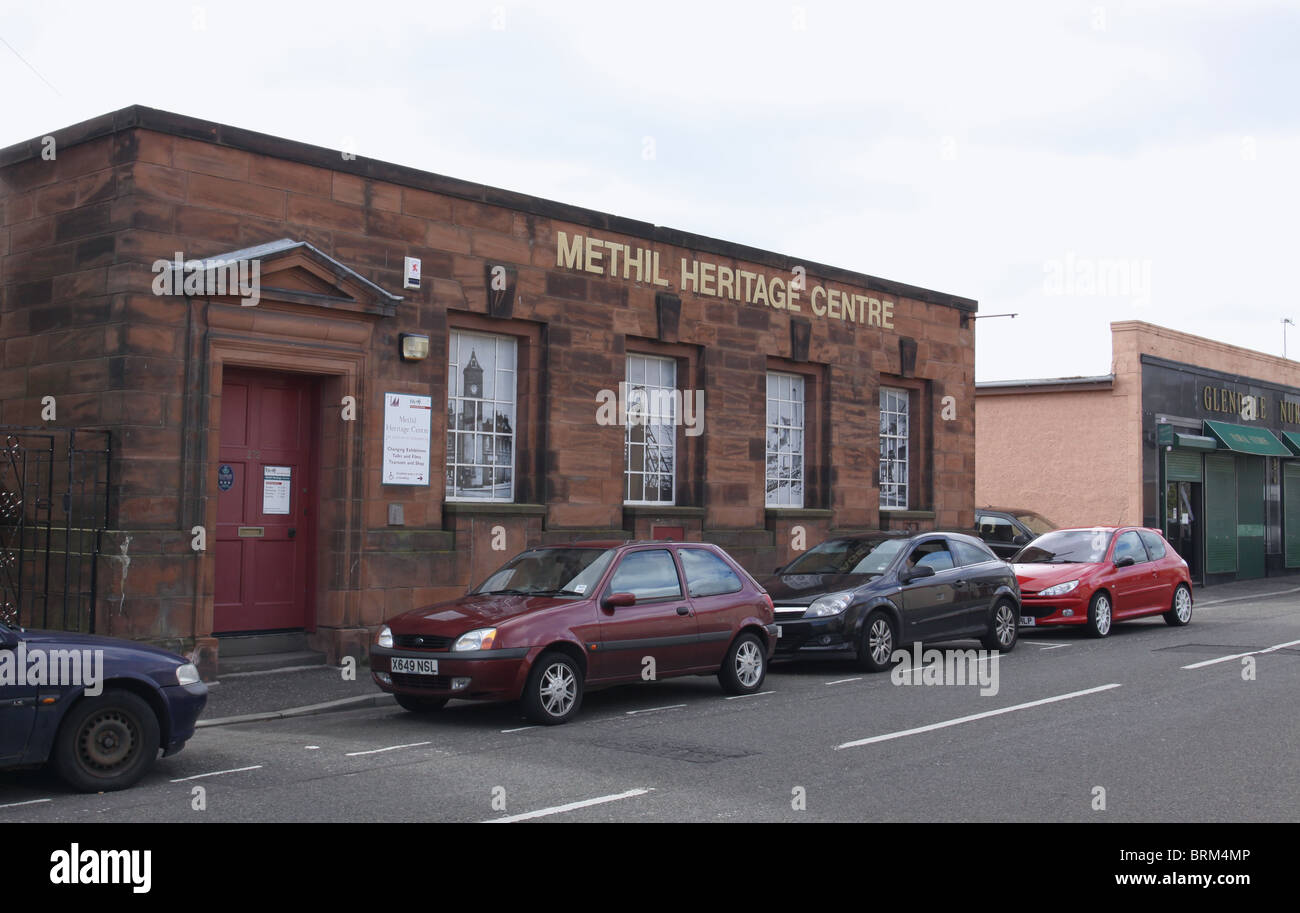
>>The local resident 26th Earl of Crawford showing macrocephaly or large head condition caused by aristocratic inbreeding in the 19th Century times. James the 26th Earl spent most of his days at sea and suffered a number of ailments. The Anstruther Boat museum doesn't dwell on negative aspects of Victorian life, the Whitaker family well known today as most inbred in the U.S.A. with telltale features, Dr. Prescott being from the Department of Biology at St. Andrews University and in charge of presentation avoids the topic that the railway above, was blamed for in destroying the original character of the 'Kingdom of Fife', opening it up to the influx of outsiders, maybe did the place a service in the long run since inbreeding is a problem but fishing villages of Scotland remain proudly insular, showing pride in their former Royal Burgh status. Anstruther Boat museum is very sparing in messages to visitors, no explanation why royal burghs were abolished, and few visitors would know that they ever were, it would cause anger and making a museum in such areas needs a very careful approach. The East Neuk railway in Fife is now disused but went to St.Andrews from Dundee and Thornton, in the 1970s there had been great efforts to save it as a tourist route, particularly by the 15th Earl of Lindsay but he was at pains to point out strategic area planning was totally against the idea. The Earl of Rothes was gifted 'Cow Bridge' over the River Leven to soften him up to the beauty of railways and it remains to this day as had his opposition to railways on his lands at Leslie. The Scottish Nationalist Party headed by Alex Salmond were successful in partially rerouting a number of rail routes, with Tricia Marwick campaigning for reinstatement of a railway as far as Methil in Leven, a place referred to by the late Duke of Edinburgh as looking from his warship like a 'dump', and locals upon hearing this took it up as a cross to bear, so that when the Methil Heritage Centre had been visited much later by the Duke, they'd been quick to remind him of this. Although funny to outsiders, the locals often lack a sense of humor as living very hard lives.
<<Instrument cluster of a Rover 25 (very similar to the pre-facelift Land Rover Freelander 1) as bought by Jim Tarvit I.S.O. of the 2003 year's REAPER boat crew. The Imperial Service Order award was given in honor of Jim's role as Deputy Chief Inspector of the Scottish Fisheries and the car had a Viking ship insignia on its radiator grille and steering wheel. Jim died aged 79, a heavy chain smoker and one of the strongest ever crew of the REAPERfifie class yacht at age 73, he'd carried hull ballast cobbles and hauled sails, he'd wrote a book on Steam Drifters and sat in the Museum's library. The skipper Tom Gardner viewed Tarvit as unkind, bitter and cruel, he was however one of the characters involved with Anstruther Boat museum, a trustee and can be seen in the keplermission video hauling boxes of fish onto a lorry. Tarvit was abhorrent, like John Noble who'd headed the Scottish Fisherman's Federation, but both could act nicer than Ian Murray.
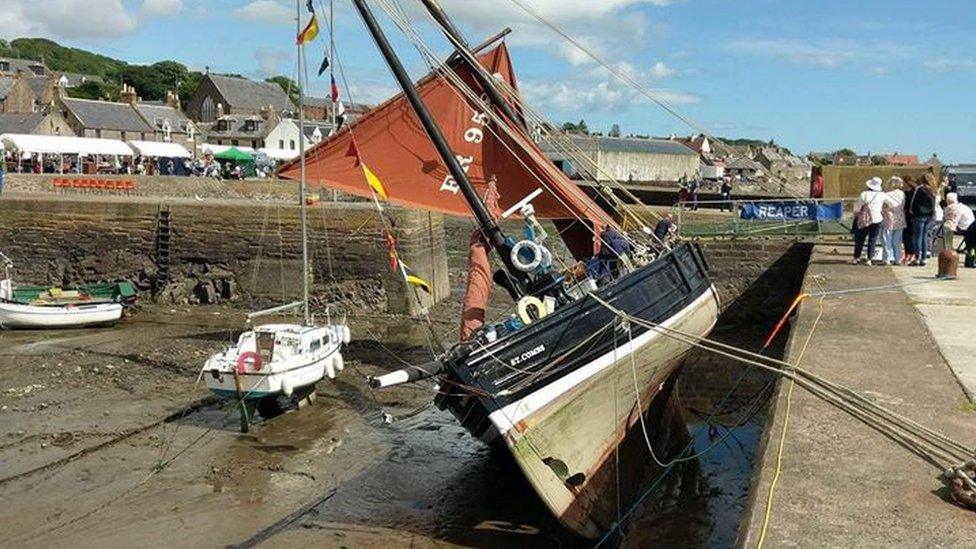
>>Skipper Mike Bartock was drafted after Toddy's health began to fail, mostly staying at home then nursing himself instead of doing tours. 'The long and the short of it' to use Toddy's words was that Mike wasn't a marine engineer as he'd been, ignorant of force multipliers he hadn't doubled the rope harbor tether at both ends of the heavy REAPER hull and after putting both huge sails up for visual effects, his single rope snapped and the boat fell over in a dry dock. Mike is still around presumably Martyn Heighton's ideas upheld the skipper's part in the heritage and as to how a seasoned skipper couldn't know about tension in ropes or just after the boat fell over had expressed relief that 'the yacht wasn't a new one', demonstrates some difficulties in training new voluntary staff.
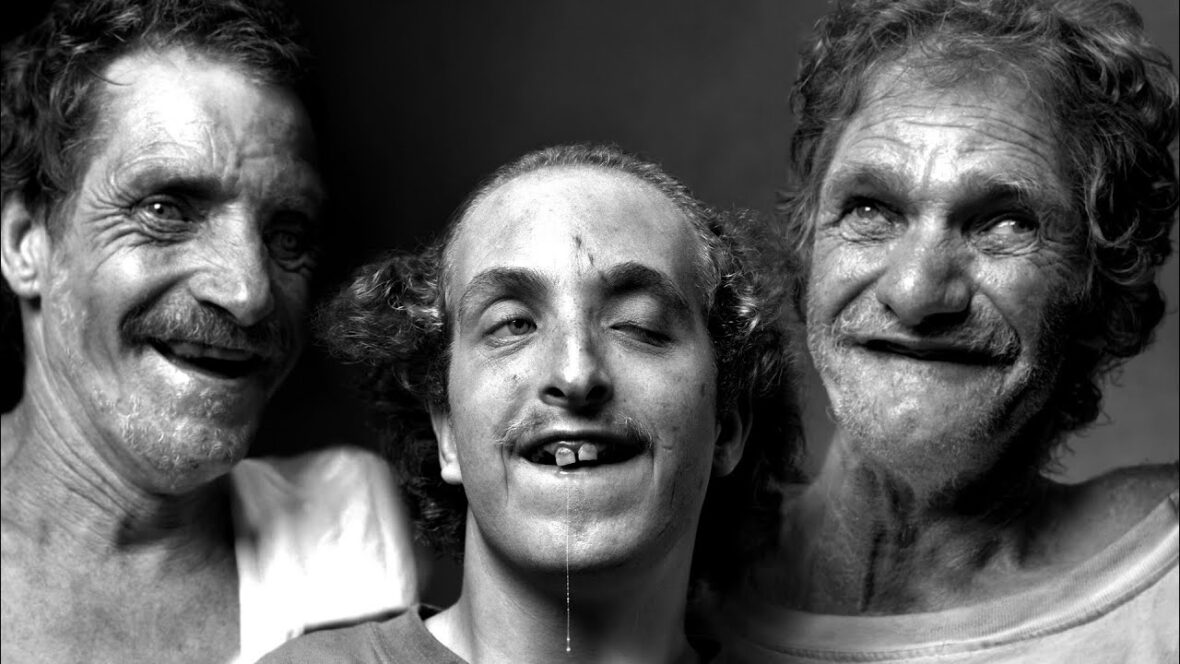
<<Some of the locals in Anstruther you know, whilst very insular indeed display a marked type of contentment and jovial behavior, this very changed from the older commercial fishing generations. It's a probably irritating sense of belonging and set of facial expressions that take a bit of getting used to. A local festival or two aren't well understood by outsiders who haven't been at all welcome there, and the area has a lot snobbery of one sort or another, for example the surprising importance of actually having a royal burgh as your old home town, that is a real problem and a bone of contention. The neighborhood you belong to is still of marked importance, whether your house lies within the known boundary of acceptance or rejection is crucial, and just how accepted outsiders are is probably dependent on their status and standing within the community. The 'small village mentality' is pronounced in the East Neuk of the Scottish Fife County and in many coastal regions of the U.K., besides elsewhere.
>>A temporary exhibition sees local members of the Museum trust get a preview before it runs for around a month. Located above Toddy's forehead is the 19th Century fishing boat skipper 'Venus Peter', from the days of Thomas Chalmers who'd been an astronomer as well as a local church minister. Toddy left has a beer glass and Simon right, a white wine. Back in the 1970s Toddy had an ugly stern trawling boat that he'd at least lay claim to have invented and today in the harbor at Anstruther it's the type most represented. The old fishing boats used to sit warming up for half an hour before putting to sea, but Toddy had descended the pier ladder in seconds and had the boat away in minutes. He'd built a plastic yacht named BRAVEHEART with which he'd planned to set sail to America but never got that far before the hull was damaged in a storm, it's still berthed in the harbor at Anstruther and Tod used to park it different places and take care of the hull.
<<Anstruther Boat Museum President David Corner appears with an R.N.L.I. officer PHOTO: D.C. Thomson, and below an R.N.L.I. flag is flying on the oldAnstruther lifeboat station. Corner, a great fan of white wine, particularly German in origin largely appeared with Prescott and like a couple of bookends together, probably shared a load of memories. In the weeding photo up page, there's a tiled path leading to a brown door at the start of the tour. Prescott and Corner would stand one on each side of that path and it might be said, the cafe there had been a meeting place for prominent politicians or St Andrews University officials. However in 2022 the Ward Museum of Wildfowl Art MD, closed its doors for last time and over the years the Anstruther Boat museum has often been faced with closure due to dwindling numbers, the local plan is to turn it into flats at some point.
>>Looking over the old lifeboat station to be demolished and below, a sail powered herring fleet upon which David Tod in conjunction with St. Andrews University aimed to recreate the fifieREAPER boat, Skipper Jim Main finding the lifestyle hard to bear, after a tough life in the Kowloon City R.H.K.P., it was soon decided to use the hull as a motorboat only and the sails for tourism, many masts were destroyed by Toddy going too fast, they'd split as rocking loose in their sockets and very heavy.
...
...
...
...
<<A highland Crofter who'd paid to man the helm of the 'fifie' class fishing boat. Crofters were part-time fishers and did other work when the herring fishing fleet moved too far south or north. This Crofter is pictured here by the crew as a posed shot, and in Tom Cunliffe's video above, Jim Main takes the helm and looks to be struggling but he was a desk job police rank for many years and Jim Tarvit much better at the role, a seasoned fisheries skipper after a career in the Royal Navy as well as Coul Deas. But Tarvit was a high rank skipper, deputy head of the Scottish fisheries, he used to strut around the Museum as did John Noble, Jim had got into home video cameras as they'd become available in the mid-1980s, and he was proud of his efforts which he'd often shown at month long displays but was haughty and disdainful, as had been Ian Murray below, seen with Sheila Taylor of the local St. Ayles Skiff coastal rowing team.
>>Wins Stewart works with Coul Deas on a boat visible from a viewing gallery that they'd hated, very shy and always complaining, so the only way to learn was to join their Boat Club, tourists would be tolerated but no volunteers or voluntary people got to watch them in David Corner's time, Vice President Robert Prescott would stare back up, it was unpleasant and not what Matthew Tanner would like to suggest about involvement in the heritage, there was disrespect and consequences followed. Above some heavy engines sit on a concrete buttress helping prevent the buildings behind from sliding downhill. Below, the education room with some punters getting their heads stuffed with lessons, other days they'd make model fish for display or have children in to learn the basics of naval architecture, but only a few insular locals.
>>Photo from Scottish Pottery with Rodger in blue as a founder member. Interesting study, standing on the filthy, unwashed step to look taller, note the crossed legs, fingers in a pocket, the tall man has turned the cold shoulder to face Rodger who is posing for the camera user but his face is red with with emotion, leaning on a surface with boredom.
<<Rodger in blue above isn't a garden chap, unlike red the choice of color signifies a certain personality. The flat areas around his house are bereft of higher flowers like this sensitive azalea, weeds do appear and grow well in the coastal air that affects success of gardens, but many resident locals do tubs to cover the bare paving areas around the old fishermen's houses, they're sheltered from the harsh salt winds beside the sea. Rodger is not retired but continues to work as do many chief executive officers in companies of the semi-autonomous peasant class. Retirement is something known of the lower social class, and few of the 'volunteers' connected with the museum are retired, Toddy had continued to do hard fisheries chores like moving and repairing nets, he owned around six fishing boats he'd continued to work with hired crews but any insular respect is qualified.
>>In the 1970s the visitor would find this gallery later changed to 'The Days Of Steam', a work in progress by founder members Tod & Prescott, with their curators, teams of voluntary adherents, and purges to sever the obligations owed in a decent working relationship. John Noble claimed that no voluntary team member was allowed to return to the Museum, they were banned for life, similar to Directors of companies. Wall art was by Tam Easson the elder.
<<Places titled 'The Scottish' or 'for Scotland' you know, usually have an authoritarian management style, not what Matthew Tanner would lead most to believe, they don't respect all comers to the heritage only a chosen few. Life membership and free entry is denied any old ... common or garden type voluntary attendant, there was a similar problem in heritage steam railways but the elitist forces were rooted up and discarded. Elite 'Volunteers' are a different kettle of fish and are retained over years.
>>Roses are very nice when they first appear but quickly fade and wither, you know just like voluntary people, but if they've been around years then they're probably paid, despite claims to the contrary and getting something for nothing is always useful, even if it doesn't last very long. But 'Volunteers' you know are obviously different, heads of the police, company C.E.O.s, even they have their season and it's just a temporary state of affairs, ironic that a Museum is trying to remember the chosen few but hey, it's a business that has prospered since 1969 and just keeps on going. Robert Herrick's 1648 poem 'Gather ye rosebuds while you may', urges readers to seize the day and make the most of opportunity.
...
>>Back in the early 1970s the Land-Rover 109 Series 2A was much envied from a distance as people hadn't known how awful they'd been to drive but there was a long road up to Overhall House where Lise above was raised in Lanarkshire, a dwelling made of recovered millstone and built beside a farmer's field that nowadays, is all too full of newbuild housing, but back then it was alone with an access road leftover from an old cloth mill that with a few joined on outbuildings had once been a highly desirable property.
Above, although the Anster Boat Museum's 'Star Of Scotland' model had been a major hit with members and thousands of visitors, we see in a color photo of the real trawler from the year 1947, its Wheelhouse was grey over a rusty lower superstructure and not as depicted in the model with faux painted wood. The oil engine fitted was a 5-cyl British Polar as installed in the KENT motor tug video below, the Museum has a 4-cyl Gardner 4T6 Hot Bulb oil engine from a Tug, and as found on the Taeping motor drifter.
<<The Smith & Rodger building originally had blue window Muntins and Stools near the also detailed half round window and sign, similar to the Morgan Car Factory of the video up page. Blue Muntins are recognized as a British Empire and colonial style of architecture. The crimson color of this model's baseboard is used instead of blue in the 2026 year S. & R. half round window, Rodger himself aged 17 in 1948 when the trawler entered service, has few surviving peers able to recall such distant 'Empire' days.
...
...
...
...
...
...
...
...
>>The Gardner 4T5 was a stationary semi-diesel engine used in mills to replace wasteful steam power and the 4T6 a marine version was needed for very slow pulling of you know, fishing drift nets by way of equaling the infinite torque or Indicated Horsepower of a steam engine in a steam drifter boat. So these delivered a huge direct drive turning output from the days of leather belt driven machinery and were very quiet in operation. A single 4T5 would power a whole cloth mill whereas a 4T6 had a higher power to weight ratio over steam engine rooms making Motor Drifters go faster.
<<Jim Tarvit I.S.O. Deputy Head of the Scottish Fisheries, wrote the Museum Trust's book about Steam Drifters and wouldn't agree that a lighter engine would make Motor Drifters go any faster since using naval architecture to illustrate, the hull was designed so that its weight was supported by flotation, and hull speed determined by length and width. However we know that Toddy had driven the REAPER too fast for its masts and by using a relatively lightweight engine. So experts at the Anstruther Boat Museum were set in their ways and Jim had pushed his wife around in a wheelchair, her hands paralyzed from working in the fishing industry, so that you know she couldn't do the cooking and they'd led hard lives around there.
<<The Head Curator of the Anster Boat Museum isn't seen in many photos but has to get along with locals who'd labelled former Fife Councilor Linda Holt, for 'aggressive' and 'inappropriate' conduct. One thing that the web visitor should know is that most of the seaside fisherman's houses in Pittenweem village or Cellardyke had been abandoned for years and were in ruins by the 1970s when developers restored them to living spaces then sold them at a high mark up so that these places have been upmarket, dorm areas of the affluent commuter for many decades, the REAPER deckhand, Donald is pulling a smile because he'd been told to be more tourist friendly, Tom Gardner didn't live near him and the other fishing skippers are down market of his seaside view 'villa' in conservation village guise, these looking just like quaint old houses but with all the mod cons on the inside.
b.gif)


.jpg)
.jpg)
.jpg)
.jpg)
.jpg)



-min.png)

.jpg)
(1).jpg)


.jpg)


.jpg)


.jpeg)





.jpg)





(1).jpg)


